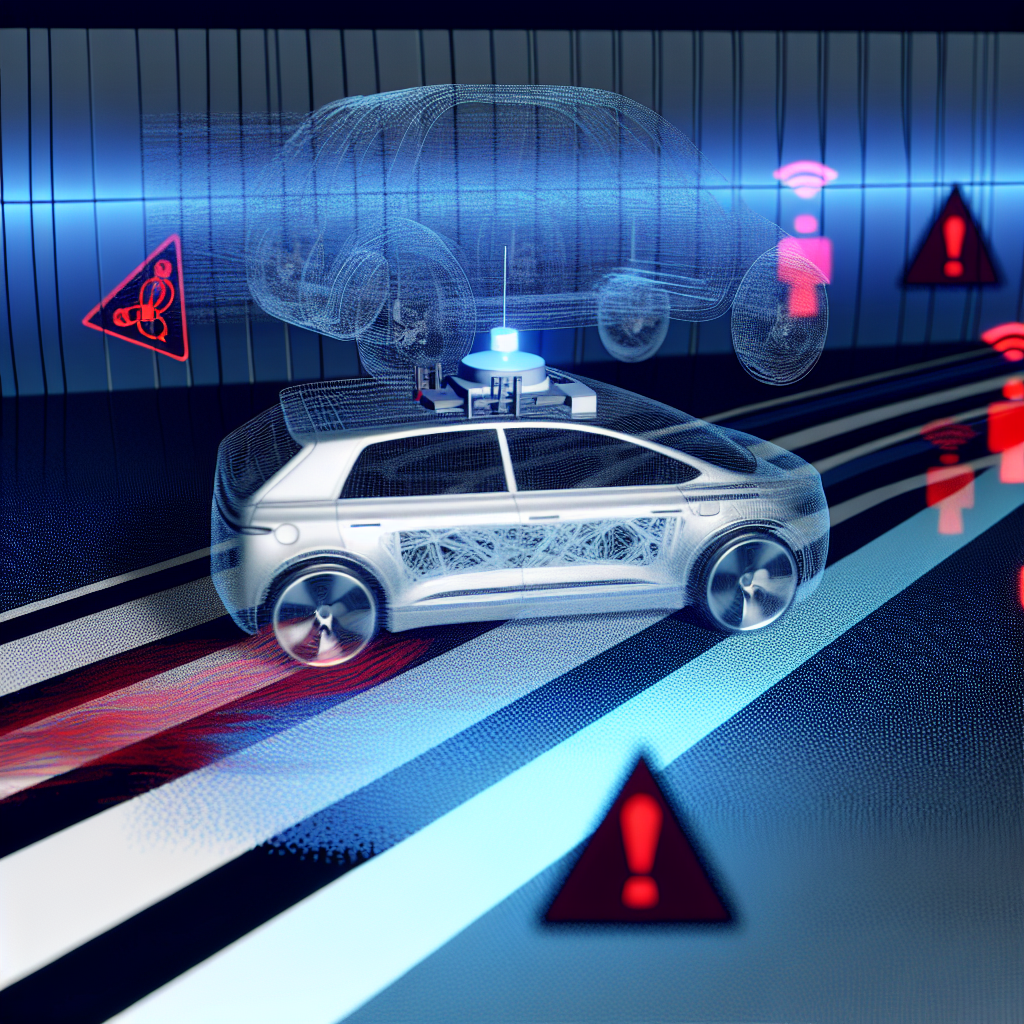
The Rise of AI in Autonomous Vehicle Security
The integration of artificial intelligence (AI) in autonomous vehicles is revolutionizing transportation, with AI autonomous vehicle security becoming a crucial area of focus. Autonomous vehicles heavily rely on complex algorithms and machine learning models to make real-time decisions, enhancing both their efficiency and safety. However, the very technology that empowers these vehicles also introduces new vulnerabilities that require advanced cybersecurity measures.
As the automotive industry continues to innovate, ensuring robust AI autonomous vehicle security becomes paramount. This involves not only protecting the vehicle’s software but also safeguarding the data and communication systems that AI technologies depend on. The growing sophistication of cyber threats necessitates a comprehensive understanding of potential risks and the implementation of effective countermeasures.
Understanding AI Threats in Autonomous Vehicles
AI threats in autonomous vehicles can be categorized into several types, each targeting different aspects of the vehicle’s operation. One of the most concerning threats is the potential for AI model manipulation, where attackers can alter the machine learning algorithms used for decision-making. This can lead to incorrect responses to environmental stimuli, such as misinterpreting traffic signs or failing to recognize obstacles.
Another significant threat is adversarial attacks, which involve subtly modifying inputs to confuse AI systems. For instance, slight changes to road markings or the visual appearance of traffic signs can lead to dangerous misinterpretations by autonomous vehicle systems. Such attacks exploit the inherent weaknesses of AI models, which can struggle with generalizing from training data to real-world scenarios.
The Mechanics of AI-Based Attacks
AI-based attacks on autonomous vehicles often employ complex techniques to exploit system vulnerabilities. A common method is the use of generative adversarial networks (GANs) to create deceptive data inputs. GANs can generate realistic-looking traffic scenarios that confuse AI systems, leading to potentially catastrophic decisions.
Additionally, attackers may use data poisoning to infiltrate the training datasets used for machine learning models. By introducing malicious data during the training phase, they can influence the AI’s behavior, causing it to make erroneous decisions. This type of attack highlights the critical importance of data integrity in AI autonomous vehicle security.
Mitigating AI Threats in Autonomous Vehicles
To address AI threats effectively, a multi-layered security approach is essential. Firstly, implementing robust encryption protocols can protect the data transmitted between autonomous vehicles and external systems. Ensuring data encryption both at rest and in transit can significantly reduce the risk of interception or manipulation by unauthorized parties.
Another vital strategy is the regular updating and patching of AI software and systems. By maintaining up-to-date software, manufacturers can close known vulnerabilities and reduce the attack surface. This proactive approach is crucial in a rapidly evolving threat landscape where new exploits are continually being discovered.
Advanced Technical Solutions for AI Security
Employing advanced anomaly detection techniques can enhance the security of AI systems in autonomous vehicles. These techniques involve monitoring AI behavior for deviations from expected patterns, which could indicate an ongoing attack. Machine learning models can be trained to recognize such anomalies, providing real-time alerts to prevent potential breaches.
Moreover, adopting a zero-trust architecture can further strengthen AI autonomous vehicle security. This security model assumes that no entity, whether internal or external, is inherently trustworthy. It requires continuous verification of all systems and networks involved, minimizing the risk of unauthorized access and data compromise.
Case Studies: Real-World Implications
Several real-world incidents underscore the importance of AI autonomous vehicle security. In one notable case, researchers demonstrated how adversarial attacks could cause an autonomous vehicle to misinterpret a stop sign as a speed limit sign, posing significant safety risks. This example highlights the potential consequences of AI vulnerabilities and the need for rigorous security testing.
Another incident involved data poisoning attacks on the datasets used for training autonomous vehicle AI models. By injecting misleading data, attackers were able to manipulate the behavior of the vehicle’s AI, demonstrating the critical need for robust data validation and cleansing procedures.
Strategic Approaches for Future Security
Looking ahead, the development of AI autonomous vehicle security will require ongoing collaboration between cybersecurity experts, automotive engineers, and policymakers. Establishing industry-wide standards and best practices will be essential to ensure the safety and security of autonomous vehicles as they become increasingly prevalent on roads worldwide.
Furthermore, investing in AI research and development focused on security can lead to innovative solutions that preemptively address emerging threats. As the field of AI continues to evolve, staying ahead of potential vulnerabilities will be crucial to safeguarding the future of autonomous transportation.
In conclusion, AI autonomous vehicle security is a complex and dynamic field that demands continuous attention and innovation. By understanding the nature of AI threats and implementing comprehensive security measures, the automotive industry can ensure that the benefits of autonomous vehicles are realized without compromising safety and security.
For more insights into AI cybersecurity, explore our articles on machine learning security and network protection strategies. To further understand the technical aspects, consider resources from external experts such as leading cybersecurity organizations.